
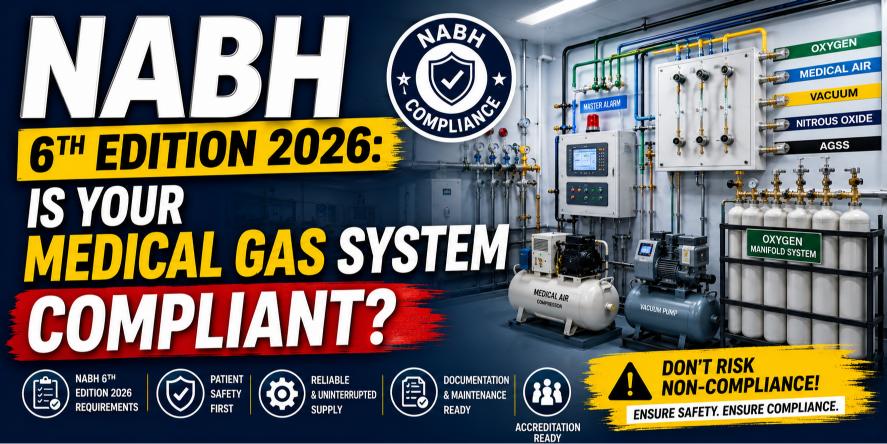
As healthcare facilities continue to prioritize patient safety, operational efficiency, and quality care, infrastructure compliance has become more critical than ever. The release and adoption of NABH 6th Edition standards reinforce the importance of maintaining robust and reliable healthcare infrastructure—including Medical Gas Pipeline Systems (MGPS).
Medical gases such as oxygen, medical air, vacuum, nitrous oxide, and AGSS systems play a direct role in patient treatment and critical care operations. Any failure, contamination, leakage, or interruption in supply can have serious consequences.
For hospital administrators, facility managers, biomedical engineers, and healthcare consultants, understanding how NABH requirements align with medical gas infrastructure is essential for accreditation, patient safety, and long-term operational reliability.
In this guide, we explore the key considerations hospital infrastructure teams must know about Medical Gas Pipeline Systems under NABH 6th Edition 2026.
Why Medical Gas Systems Are Critical in Modern Hospitals
Medical Gas Pipeline Systems form the backbone of critical healthcare services.
They support:
- Intensive Care Units (ICUs)
- Operation Theatres (OTs)
- Emergency Departments
- Neonatal Intensive Care Units (NICUs)
- Recovery Rooms
- High Dependency Units (HDUs)
- Specialized Treatment Areas
A properly designed MGPS ensures:
- Continuous oxygen availability
- Safe medical air delivery
- Reliable vacuum suction services
- Effective waste anesthetic gas disposal
- Reduced risk of contamination
- Improved patient safety
Because these systems directly impact clinical outcomes, NABH places significant emphasis on infrastructure safety, monitoring, maintenance, and documentation.
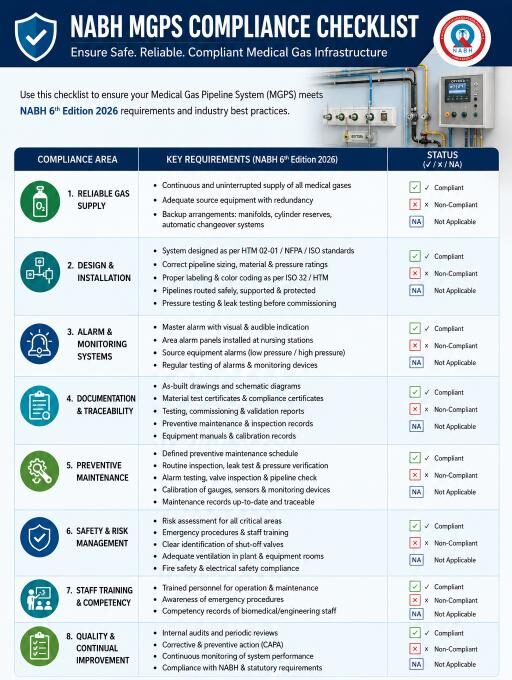
Key NABH Expectations for Medical Gas Infrastructure
Although NABH focuses on overall healthcare quality management, infrastructure-related assessments often evaluate the following aspects of MGPS:
1. Reliable and Uninterrupted Gas Supply
Hospitals must demonstrate continuous availability of medical gases.
Infrastructure teams should ensure:
- Redundant oxygen supply systems
- Backup manifolds
- Emergency reserve cylinders
- Reliable distribution networks
- Automatic changeover systems
Downtime in oxygen supply is unacceptable in critical care environments.
2. Safe Installation and Design Practices
Medical gas pipelines should be:
- Designed specifically for medical applications
- Properly labeled and color coded
- Routed to prevent accidental damage
- Installed using approved materials
- Pressure tested before commissioning
Incorrect installation remains one of the leading causes of future operational issues.
3. Alarm and Monitoring Systems
Modern healthcare facilities are expected to maintain adequate monitoring mechanisms.
This includes:
- Master alarm panels
- Area alarm systems
- Source equipment alarms
- Pressure monitoring devices
- Fault indication systems
Timely identification of abnormal pressure conditions helps prevent clinical disruptions.
4. Documentation and Traceability
One of the strongest areas emphasized in NABH assessments is documentation.
Hospitals should maintain:
- As-built drawings
- Testing certificates
- Validation reports
- Preventive maintenance records
- Calibration records
- Equipment manuals
- Inspection reports
Well-maintained documentation demonstrates infrastructure control and accountability.
5. Preventive Maintenance Programs
A reactive approach is no longer sufficient.
NABH-aligned healthcare facilities should implement:
- Scheduled inspections
- Leak detection checks
- Pressure verification
- Alarm testing
- Valve inspections
- Flow performance assessments
Preventive maintenance reduces unexpected failures and extends equipment lifespan.
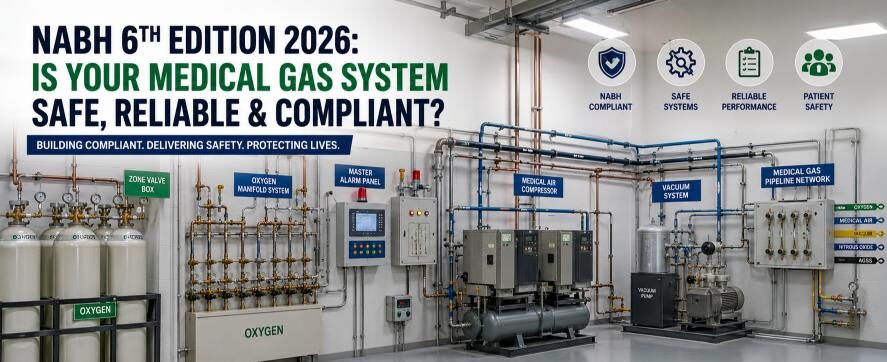
Common Compliance Gaps Found During Hospital Assessments
Many hospitals discover deficiencies during accreditation reviews.
Some of the most common issues include:
Incomplete Documentation
Missing maintenance records or commissioning reports can create compliance concerns.
Non-Functional Alarm Systems
Alarm panels that are disabled, ignored, or improperly maintained compromise safety.
Aging Infrastructure
Older pipelines may suffer from:
- Corrosion
- Pressure loss
- Leakage
- Performance degradation
Inadequate Backup Arrangements
Failure to provide secondary or emergency gas sources increases operational risk.
Lack of Staff Awareness
Facility personnel should understand emergency procedures and basic MGPS operation.
Why NABH Compliance Matters Beyond Accreditation
Many healthcare organizations view accreditation as the primary objective.
However, the real value lies in:
Improved Patient Safety
Reliable gas delivery supports uninterrupted patient care.
Reduced Operational Risk
Well-maintained systems experience fewer failures.
Better Emergency Preparedness
Redundant systems improve resilience during emergencies.
Enhanced Reputation
Accredited healthcare facilities earn greater trust from patients and stakeholders.
Lower Long-Term Costs
Preventive maintenance reduces expensive emergency repairs and downtime.
Industry Standards Supporting MGPS Compliance
In addition to NABH requirements, hospitals should align their systems with recognized industry standards where applicable:
HTM Standards
HTM 02-01 provides guidance for the design, installation, operation, and maintenance of medical gas pipeline systems.
NFPA Standards
NFPA guidelines address medical gas storage, distribution, fire safety, and emergency preparedness.
ISO Standards
Relevant ISO standards help ensure quality management and operational consistency.
Combining NABH requirements with global best practices creates a safer and more reliable healthcare environment.
Future Trends in Medical Gas Infrastructure
Healthcare infrastructure is rapidly evolving.
Leading hospitals are adopting:
- Smart alarm monitoring systems
- Remote infrastructure monitoring
- Predictive maintenance technologies
- Energy-efficient medical air systems
- Integrated Building Management Systems (BMS)
- Digital maintenance tracking
These innovations improve compliance, reliability, and operational visibility.

How Concord Engineering Solutions Helps Hospitals Achieve Compliance
At Concord Engineering Solutions, we understand that Medical Gas Pipeline Systems are more than infrastructure—they are life-support systems.
Our team provides end-to-end solutions including:
- MGPS Design and Engineering
- Supply and Installation
- Oxygen PSA Plants
- Medical Air Systems
- Vacuum Systems
- AGSS Systems
- LMO Systems
- Testing and Commissioning
- Infrastructure Audits
- Preventive Maintenance Support
- Turnkey Healthcare Engineering Solutions
We help hospitals build safe, compliant, and future-ready medical gas infrastructure aligned with healthcare industry best practices.
Frequently Asked Questions (FAQs)
NABH compliance involves maintaining safe, reliable, documented, and properly monitored medical gas infrastructure that supports patient care and healthcare quality standards.
Alarm systems provide early warning of abnormal pressure conditions, equipment failures, and supply disruptions, helping prevent patient safety incidents.
Hospitals should follow a preventive maintenance schedule that includes routine inspections, testing, calibration, and performance verification.
Hospitals are expected to maintain reliable and uninterrupted medical gas supplies, making backup arrangements an essential infrastructure requirement.
Keep Your Medical Gas System Running Safely All Year
Protect your hospital with a professional MGPS Annual Maintenance Contract from Concord Engineering Solutions.
Our experienced team provides preventive maintenance, inspections, testing, emergency support, and compliance-focused services tailored to your facility’s needs.
Contact Concord Engineering Solutions today